
Introduction
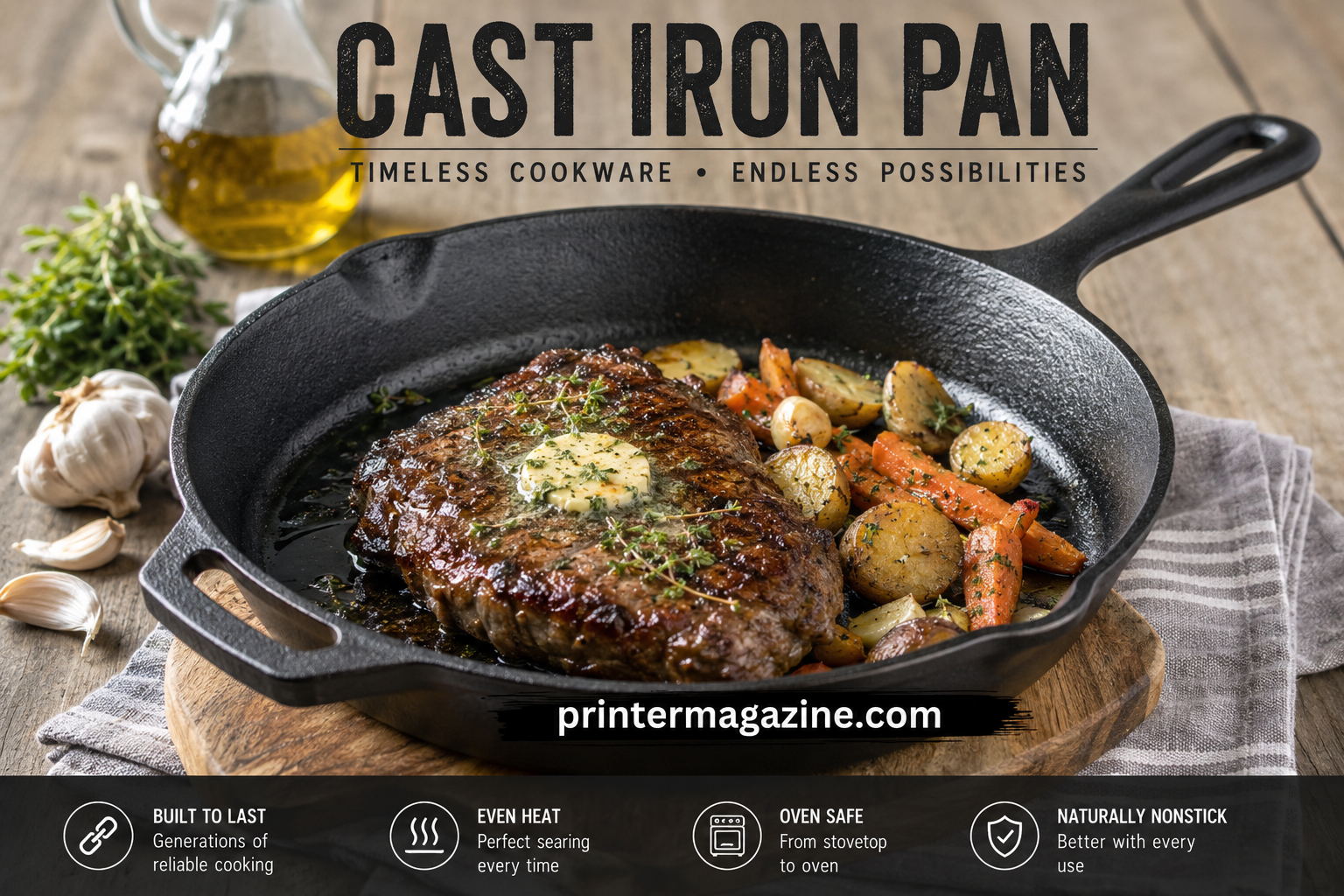
A cast iron pan has remained one of the most trusted pieces of cookware for generations. While modern kitchens are filled with nonstick pans and stainless steel pots, cast iron continues to stand out because of its durability, versatility, and excellent heat retention. Whether you’re frying eggs, searing steak, baking cornbread, or roasting vegetables, a cast iron pan can handle almost every cooking task with ease.
Many professional chefs and home cooks prefer cast iron because it lasts for decades and often improves with age. Unlike many other pans that wear out after a few years, a well-maintained cast iron pan can become a family heirloom passed down through generations. This guide explores everything you need to know, from its history and benefits to seasoning, maintenance, cooking techniques, and buying tips.
| Feature | Details |
|---|---|
| Material | Cast Iron |
| Average Lifespan | Several decades or more |
| Best For | Frying, baking, roasting, grilling, searing |
| Heat Retention | Excellent |
| Oven Safe | Yes (most models) |
What Is a Cast Iron Pan?
A cast iron pan is cookware made by pouring molten iron into a mold. After cooling, the pan becomes extremely strong and capable of handling very high cooking temperatures. Most cast iron cookware has a naturally rough surface that becomes smoother over time as it develops a seasoned coating.
RED MORE: Cuba Countryside: A Journey Through the Island’s Rural Beauty
Unlike cookware with artificial nonstick coatings, cast iron creates its own cooking surface through seasoning. This protective layer forms when a thin coating of oil is heated repeatedly, making cooking easier while helping prevent rust.
Why Cast Iron Has Stayed Popular
Kitchen trends have changed over the years, yet cast iron has never disappeared. One reason is its unmatched durability. A quality pan can last for decades without losing its performance.
Another reason is versatility. You can use it on gas stoves, electric ranges, induction cooktops, campfires, grills, and even inside the oven. Few other cookware materials offer this level of flexibility.
Heat retention is another major advantage. Once hot, the pan stays hot for a long time, making it perfect for recipes that need consistent temperatures.
Benefits of Using a Cast Iron Pan
One of the greatest strengths of cast iron is even cooking. The thick material distributes heat steadily, reducing sudden temperature changes.
It also delivers excellent browning. Whether cooking steak, chicken, burgers, or vegetables, the pan creates a flavorful crust that many lighter pans struggle to achieve.
Another benefit is its impressive lifespan. With proper care, the same pan can serve several generations.
Some cooks also appreciate that small amounts of iron may naturally transfer into certain foods, especially acidic dishes, making it a useful source of dietary iron for some people.
Seasoning a Cast Iron Pan
Seasoning is one of the most important parts of owning cast iron. It protects the surface from rust while improving its natural nonstick qualities.
The process begins by washing and drying the pan completely. Apply a very thin layer of cooking oil over every surface, including the handle and bottom. Bake the pan upside down in the oven for about an hour at a high temperature, then allow it to cool naturally.
Repeating this process several times creates a stronger cooking surface. Regular cooking with oils also helps improve seasoning over time.
Everyday Cleaning and Maintenance
Many people believe cast iron is difficult to clean, but it is actually quite simple.
After cooking, allow the pan to cool slightly before washing it with warm water. Use a soft brush or scraper to remove food residue. Dry the pan immediately to prevent moisture from causing rust.
After drying, apply a very light coat of oil before storing it. This simple routine keeps the surface protected and ready for the next meal.
Avoid leaving the pan soaked in water for long periods because moisture is the biggest enemy of cast iron.
Foods That Work Best
A cast iron pan performs exceptionally well with many different recipes.
It is ideal for thick steaks because it creates an excellent crust while keeping the inside juicy. Fried chicken develops a crispy coating thanks to the steady cooking temperature. Cornbread bakes beautifully with crisp edges and a soft center.
Roasted vegetables become caramelized, while pancakes and grilled sandwiches gain an even golden color.
Although acidic foods like tomato sauces can be cooked occasionally, long simmering times may affect the seasoning.
Common Mistakes to Avoid
New owners sometimes make avoidable mistakes that reduce the life of their cookware.
- Leaving the pan wet after washing.
- Using excessive soap repeatedly.
- Storing food inside the pan for long periods.
- Heating an empty pan for too long.
- Forgetting to oil it after cleaning.
Avoiding these simple mistakes keeps the cookware in excellent condition for years.
Choosing the Right Cast Iron Pan
When shopping for cast iron cookware, think about size, weight, and intended use.
A 10- or 12-inch skillet is the most versatile choice for everyday cooking. It is large enough for family meals while remaining easy to handle.
Some pans come pre-seasoned from the factory, making them ready to use immediately. Others require seasoning before their first use.
Look for a sturdy handle, balanced weight, and a smooth cooking surface whenever possible.
Cast Iron vs Other Cookware
| Feature | Cast Iron | Nonstick | Stainless Steel |
|---|---|---|---|
| Lifespan | Decades | Few years | Long |
| High Heat | Excellent | Limited | Very Good |
| Oven Safe | Yes | Depends | Usually Yes |
| Natural Cooking Surface | Yes | No | No |
| Heat Retention | Excellent | Moderate | Good |
Each cookware type has its strengths, but cast iron offers one of the best combinations of durability and cooking performance.
A Real-Life Example
Imagine preparing breakfast for your family. You start by frying bacon in the pan. Without changing cookware, you cook eggs in the flavorful drippings. Next, you toast bread and finally bake a breakfast skillet in the oven—all using the same pan.
This flexibility is one reason why cast iron has remained popular for generations.
Conclusion
A cast iron pan is far more than a cooking tool. It is an investment that rewards proper care with decades of reliable performance. From perfectly seared steaks to homemade bread and crispy vegetables, it delivers consistent results across countless recipes.
Learning to season and maintain cast iron requires only a little effort, but the benefits last for years. Whether you’re a beginner or an experienced cook, adding a quality cast iron pan to your kitchen is a decision that continues to pay off every time you cook.
Frequently Asked Questions (FAQs)
1. Can a cast iron pan be used on an induction stove?
Yes. Since cast iron is magnetic, it works very well on induction cooktops and provides excellent heat retention.
2. How often should a cast iron pan be seasoned?
Most pans only need occasional reseasoning. Regular cooking with oil naturally maintains the protective surface.
3. Is soap safe for cleaning cast iron?
A small amount of mild soap is generally fine, but avoid harsh scrubbing and always dry the pan immediately afterward.
4. Why does my cast iron pan rust?
Rust usually develops when moisture remains on the pan for too long or it is stored without a light protective coating of oil.
5. Can I cook every day with a cast iron pan?
Absolutely. Daily cooking helps strengthen the seasoned surface and improves the pan’s cooking performance over time.