Resistance bands have become one of the most popular fitness tools for people who want to improve strength, flexibility, and mobility without expensive gym equipment. Whether you are a beginner starting your fitness journey, an athlete looking for better performance, or someone who prefers home workouts, resistance bands offer a simple yet powerful solution. These lightweight bands can create challenging exercises by using tension instead of heavy weights, making workouts more accessible and effective.
In this guide, you’ll learn what resistance bands are, how they work, their benefits, different types, exercises, and how to choose the right option for your fitness goals. Understanding how to use this versatile equipment can help you create a complete workout routine almost anywhere.
What Are Resistance Bands and How Do They Work?
Resistance bands are flexible fitness tools made from elastic materials such as latex or rubber. They are designed to provide resistance when stretched, forcing your muscles to work harder during movement. Unlike traditional weights that rely on gravity, these bands create continuous tension throughout an exercise.
RED MORE: How to Measure Room for Furniture: A Complete Step-by-Step Guide
For example, when performing a bicep curl with a dumbbell, the resistance changes depending on your position. With a band, the tension increases as the band stretches, creating a unique challenge for your muscles. This helps improve muscle activation, control, and endurance.
Many fitness professionals use bands for strength training, rehabilitation, stretching routines, and athletic conditioning. Their simple design allows users to perform hundreds of exercises targeting almost every muscle group.
Why Resistance Bands Are Effective for Fitness
The effectiveness of resistance bands comes from their ability to provide adjustable resistance without requiring large equipment. They can be used for building strength, improving balance, and increasing flexibility.
Unlike heavy machines, bands encourage natural movement patterns. They require your stabilizing muscles to work, which can improve coordination and body awareness. This makes them useful for beginners and advanced athletes alike.
Another advantage is convenience. A complete set of bands can fit inside a small bag, allowing people to exercise at home, outdoors, while traveling, or even in an office space.
Types of Resistance Bands Explained
Different bands are designed for different training purposes. Choosing the right type depends on your workout style, experience level, and fitness goals.
| Type of Band | Common Uses | Best For |
|---|---|---|
| Loop Bands | Squats, glute workouts, leg exercises | Beginners and lower-body training |
| Tube Bands With Handles | Strength exercises and upper-body workouts | Full-body workouts |
| Flat Bands | Stretching and rehabilitation | Mobility training |
| Fabric Bands | Hip and leg exercises | Glute activation |
| Heavy Resistance Bands | Advanced strength training | Athletes and experienced users |
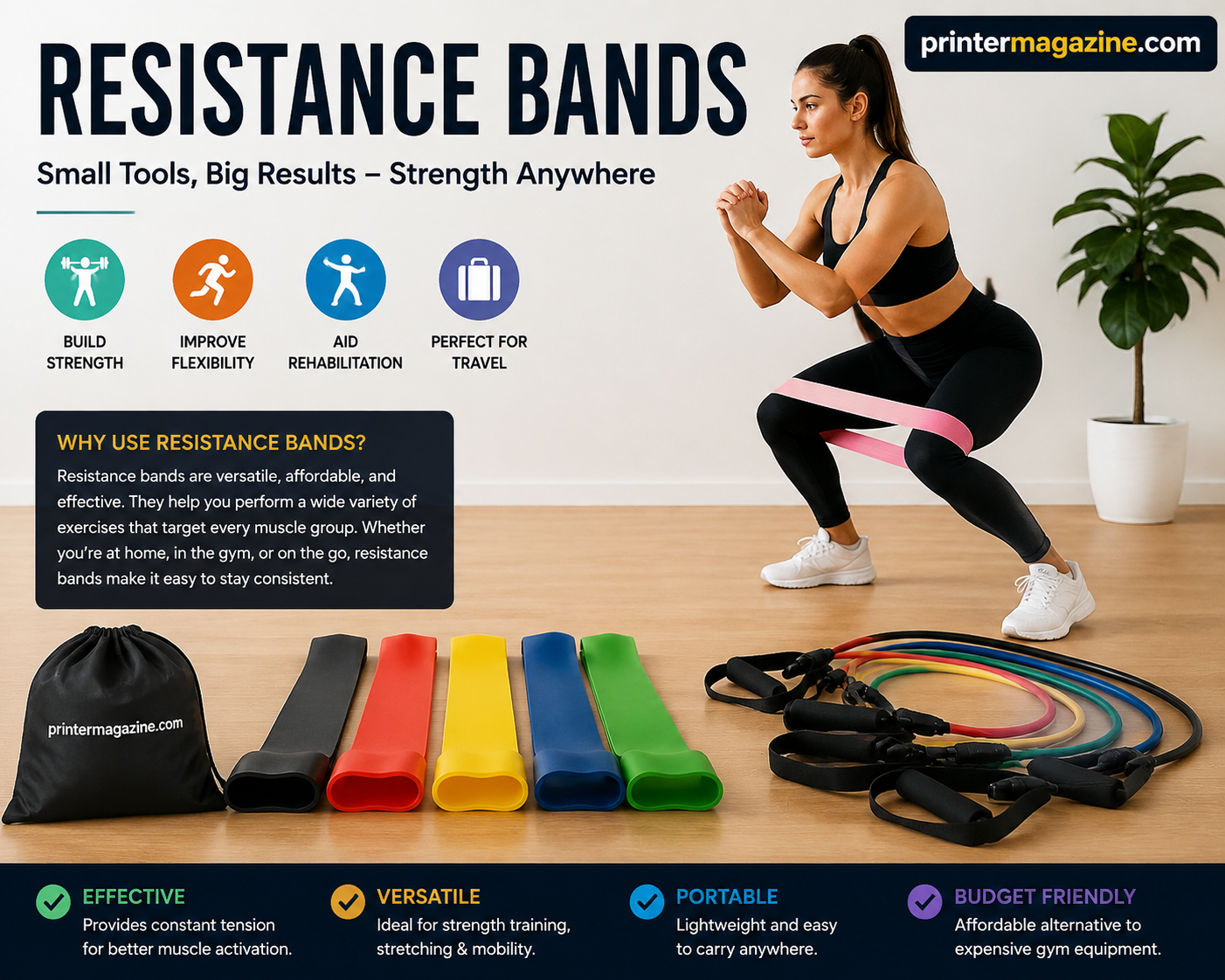
Loop bands are commonly used for lower-body exercises because they stay securely around the legs. Tube bands with handles feel more similar to traditional gym equipment and work well for exercises like chest presses and rows.
Benefits of Using Resistance Bands
Improves Strength Without Heavy Weights
One of the biggest advantages of resistance bands is their ability to build strength without requiring heavy dumbbells or machines. The increasing tension challenges muscles throughout the movement.
Regular training can improve muscle endurance and support better physical performance. When combined with proper nutrition and consistency, bands can contribute to noticeable strength improvements.
Supports Home and Travel Workouts
Many people struggle to maintain fitness routines because of busy schedules or limited access to gyms. Resistance bands solve this problem because they require minimal space.
A small collection of bands can replace many pieces of traditional equipment. They are easy to store, affordable, and convenient for people who want flexible workout options.
Helps With Rehabilitation and Mobility
Physical therapists often use bands during recovery programs because they allow controlled movements. They can help rebuild strength after injuries while reducing stress on joints.
Gentle resistance exercises can improve flexibility, stability, and range of motion when performed correctly. However, people recovering from injuries should follow professional guidance.
Popular Resistance Band Exercises for Full-Body Training
Resistance bands can be used for hundreds of exercises. A balanced routine should include movements that target the upper body, lower body, and core.
Some effective exercises include:
- Squats for legs and glutes
- Rows for back and shoulders
- Chest presses for upper-body strength
- Shoulder raises for stability
- Glute bridges for hip activation
A beginner might start with lighter resistance and focus on proper form. Over time, increasing resistance or repetitions can create additional challenges.
How to Choose the Right Resistance Band
Selecting the correct band depends on your current fitness level and goals. Beginners should avoid starting with extremely strong resistance because it can affect technique and increase the chance of poor movement patterns.
A good approach is choosing a set with multiple resistance levels. This allows gradual progression as your strength improves.
Consider these factors when buying bands:
- Material quality and durability
- Resistance range
- Comfort during use
- Exercise goals
- Portability requirements
High-quality bands usually provide smoother resistance and last longer with regular use.
Resistance Bands vs Traditional Weights
Both bands and weights have advantages. Traditional weights are excellent for maximum strength development, while bands provide versatility and convenience.
Weights typically offer consistent resistance based on gravity, while bands create increasing tension during movement. This difference can make exercises feel more challenging near the end of the motion.
For many people, combining both methods creates an effective training program. Bands are especially useful for warm-ups, accessory exercises, and improving movement control.
Common Mistakes When Using Resistance Bands
Although bands are simple tools, using them incorrectly can reduce effectiveness. One common mistake is choosing resistance that is too difficult. This often leads to poor form and reduced muscle engagement.
Another mistake is rushing through exercises. Slow, controlled movements usually provide better results because muscles remain under tension longer.
People should also inspect bands regularly. Small cracks or damage can weaken the material and increase the risk of snapping during use.
How Resistance Bands Fit Different Fitness Goals
Resistance bands are suitable for many types of training. Someone trying to lose weight can use them for high-intensity circuits. A beginner can use them for learning strength movements safely.
Athletes often include bands in warm-ups and performance training. Older adults may use them to maintain mobility and independence.
Their adaptability is what makes them valuable. The same equipment can support different goals as a person’s fitness level changes.
The Future of Portable Fitness Training
Fitness trends continue moving toward convenient and flexible solutions. People want equipment that fits their lifestyles rather than forcing them into complicated routines.
Resistance bands represent this shift because they combine simplicity, affordability, and effectiveness. They allow users to create personalized workouts without needing large spaces or expensive memberships.
As more people focus on practical health habits, portable fitness equipment will continue playing an important role.
Conclusion
Resistance bands are a simple but powerful fitness tool that can help people improve strength, flexibility, balance, and overall physical performance. Their lightweight design, affordable price, and wide range of exercises make them suitable for beginners, athletes, and anyone looking for convenient training options.
The key to success is using proper technique, selecting the right resistance level, and staying consistent. Whether you are exercising at home, traveling, or adding variety to gym workouts, these bands can provide effective challenges for your entire body.
With the right approach, resistance bands can become a valuable part of a long-term fitness routine and help you achieve stronger, healthier movement every day.
Frequently Asked Questions (FAQs)
1. Are resistance bands good for building muscle?
Yes, resistance bands can help build muscle by creating tension that challenges your muscles. Consistent training with progressive resistance can improve strength and muscle endurance.
2. Can beginners use resistance bands?
Absolutely. Beginners can start with lighter bands to learn proper movement patterns. They are a safe and effective way to begin strength training.
3. How long do resistance bands last?
Quality bands can last several years with proper care. Keeping them away from extreme heat, sunlight, and sharp objects helps extend their lifespan.
4. Can resistance bands replace gym equipment?
For many workouts, yes. Bands can replace several machines and weights, especially for strength, mobility, and conditioning exercises.
5. How often should I use resistance bands?
Most people can use them two to five times per week depending on their goals. Rest days and proper recovery are important for progress.