Introduction
Buying new furniture is exciting, but nothing is more frustrating than discovering that your new sofa, bed, or dining table doesn’t fit the room. Many people focus only on the furniture’s dimensions and forget to measure the available space correctly. Learning how to measure room for furniture can save time, money, and unnecessary stress.
Whether you’re moving into a new home, redesigning your living room, or replacing old furniture, accurate measurements help you make smarter decisions. A well-measured room feels balanced, comfortable, and functional instead of crowded or empty. This guide explains everything you need to know, from measuring walls and doorways to planning walking space and furniture placement.
Why Measuring Your Room Matters
Furniture should complement your living space instead of overwhelming it. Even beautiful furniture can look awkward if it is too large or too small for the room. Proper measurements help create a comfortable environment where people can move around easily.
RED MORE: Katmovie: Understanding the Popular Movie Platform, Its Risks, and Legal Alternatives
Measuring first also reduces the risk of expensive returns or exchanges. Large furniture often comes with delivery fees, and returning oversized items can be difficult. Spending a few extra minutes with a measuring tape prevents these problems before they happen.
Tools You’ll Need Before Measuring
Before you begin, gather a few simple tools that make the process faster and more accurate.
| Tool | Purpose |
|---|---|
| Measuring tape | Measure room dimensions accurately |
| Notebook or phone | Record measurements |
| Pencil | Sketch a simple room layout |
| Masking tape | Mark furniture sizes on the floor |
| Laser measure (optional) | Measure large rooms quickly |
These inexpensive tools make planning much easier and help avoid mistakes.
How to Measure Room for Furniture Correctly
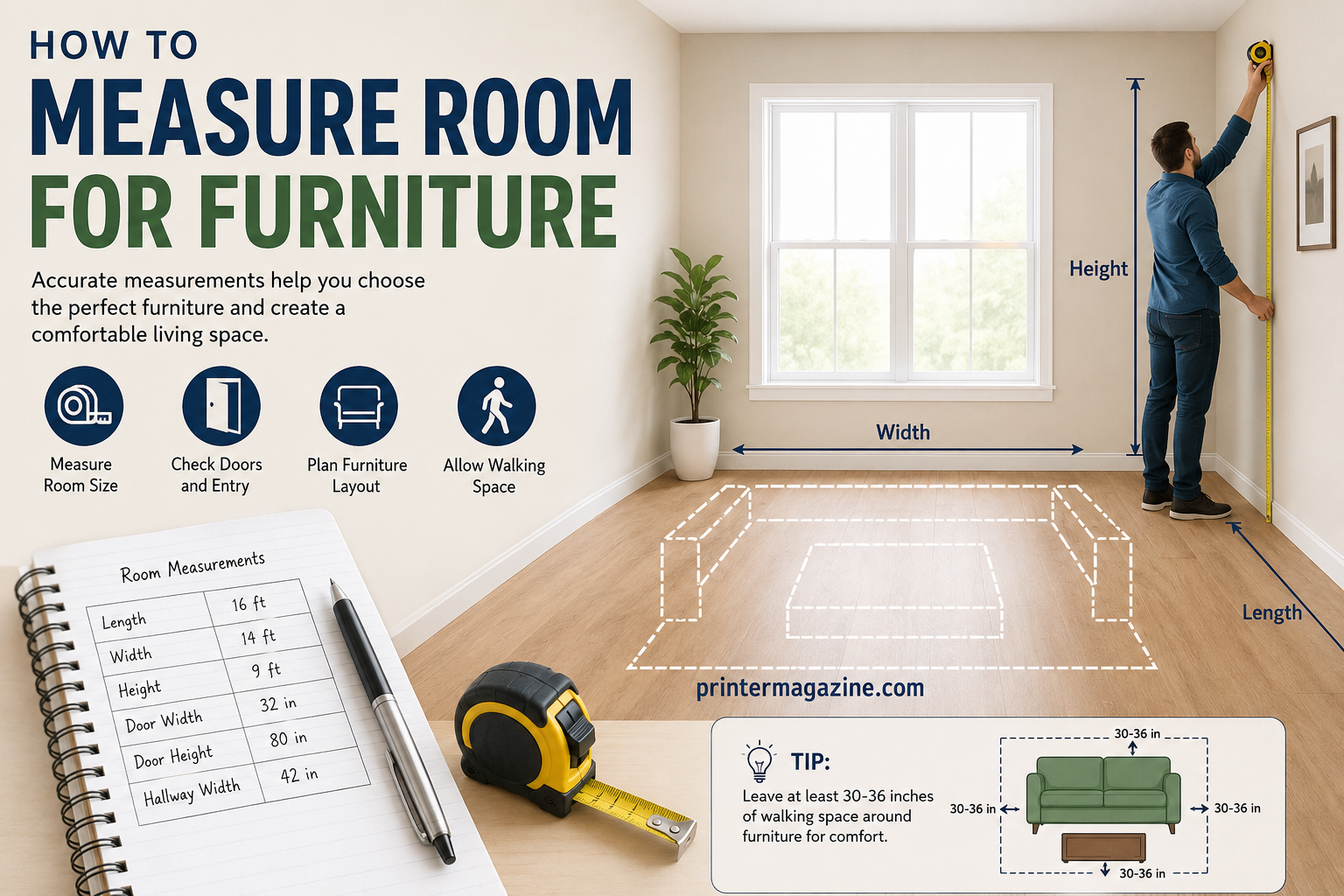
The first step is measuring the length and width of your room. Place the measuring tape against one wall and extend it to the opposite wall. Write down the exact measurements in feet and inches.
Next, measure the ceiling height. This is especially important if you’re buying tall bookshelves, wardrobes, or entertainment centers.
After recording the room dimensions, measure each wall separately. Some rooms are not perfect rectangles, so individual wall measurements provide greater accuracy.
Measure Doors, Hallways, and Staircases
Many people forget that furniture must first pass through the entrance before reaching the room.
Measure:
- Door width and height
- Hallway width
- Staircase width
- Elevator dimensions (for apartments)
A sofa that fits perfectly inside the room is useless if it cannot fit through the front door. Delivery companies often recommend checking these measurements before placing an order.
Leave Enough Walking Space
One common decorating mistake is placing furniture too close together. Every room should have enough space for comfortable movement.
Most designers recommend leaving around 30–36 inches for main walkways. Smaller rooms can work with slightly less, but people should never feel squeezed between furniture pieces.
Imagine carrying groceries or vacuuming the room. If movement feels restricted, the layout probably needs adjustment.
Measure Existing Furniture
If you’re replacing only one piece of furniture, measure the furniture you already own.
Compare its size with the available room space. This gives you a realistic idea of whether the new item should be larger, smaller, or approximately the same size.
For example, if your current sofa feels too bulky, consider reducing its width by several inches instead of buying another large model.
Use Floor Markings Before Buying
One of the easiest tricks is using masking tape to outline the furniture dimensions directly on the floor.
Tape the exact length and width where the furniture will sit. Then walk around it for a few minutes.
This simple method helps you visualize the layout and quickly reveals whether the furniture feels too large or leaves enough walking space.
Consider Windows and Fixed Features
Furniture placement isn’t only about empty floor space.
Take note of:
- Windows
- Heating vents
- Electrical outlets
- Fireplaces
- Built-in shelves
- Radiators
Blocking these features can reduce comfort and functionality. For example, placing a sofa directly in front of a window may block natural light.
Room-by-Room Measuring Tips
Living Room
Measure the seating area carefully. Leave enough space between the sofa and coffee table for comfortable movement. Make sure TV stands allow clear viewing without blocking pathways.
Bedroom
Measure the bed area along with space needed for bedside tables and wardrobes. Ensure drawers and closet doors can open completely.
Dining Room
Allow enough room for chairs to slide out comfortably. Guests should be able to sit and stand without hitting walls or other furniture.
Home Office
Measure desk space while leaving room for office chairs to roll backward. Consider nearby power outlets for computers and other electronics.
Common Measuring Mistakes
Many homeowners make simple mistakes that lead to furniture problems.
Some of the most common include:
- Measuring only floor space
- Ignoring door sizes
- Forgetting ceiling height
- Not leaving walking space
- Guessing measurements instead of using a tape
Avoiding these mistakes makes furniture shopping much easier.
Practical Example
Imagine buying a sectional sofa for a living room measuring 14 × 16 feet.
The sofa itself measures 10 × 8 feet. At first glance, it seems like it will fit easily. However, after allowing space for a coffee table, TV stand, side tables, and walking paths, the room begins to feel crowded.
By measuring carefully beforehand, you may decide that a slightly smaller sectional provides a much better balance. The room remains comfortable while still offering plenty of seating.
Conclusion
Understanding how to measure room for furniture is one of the smartest steps before purchasing any large item for your home. Accurate measurements prevent costly mistakes, improve comfort, and help create rooms that feel spacious and well organized.
Take time to measure walls, doors, windows, and walking space before making a decision. A few careful measurements today can save hours of frustration later. Whether you’re furnishing a new home or updating a single room, careful planning ensures every piece fits perfectly and enhances your living space.
Frequently Asked Questions (FAQs)
1. What is the easiest way to measure a room for furniture?
Use a measuring tape to record the room’s length, width, and height. Then measure doors and hallways before purchasing furniture.
2. How much walking space should be left around furniture?
Most rooms should have about 30–36 inches of walking space for comfortable movement.
3. Should I measure doorways before buying furniture?
Yes. Measuring doorways ensures the furniture can be delivered into your home without problems.
4. Is masking tape useful for planning furniture placement?
Yes. Marking furniture dimensions on the floor helps visualize the layout before making a purchase.
5. Can I measure a room without professional tools?
Absolutely. A standard measuring tape, notebook, and pencil are enough for accurate room measurements.